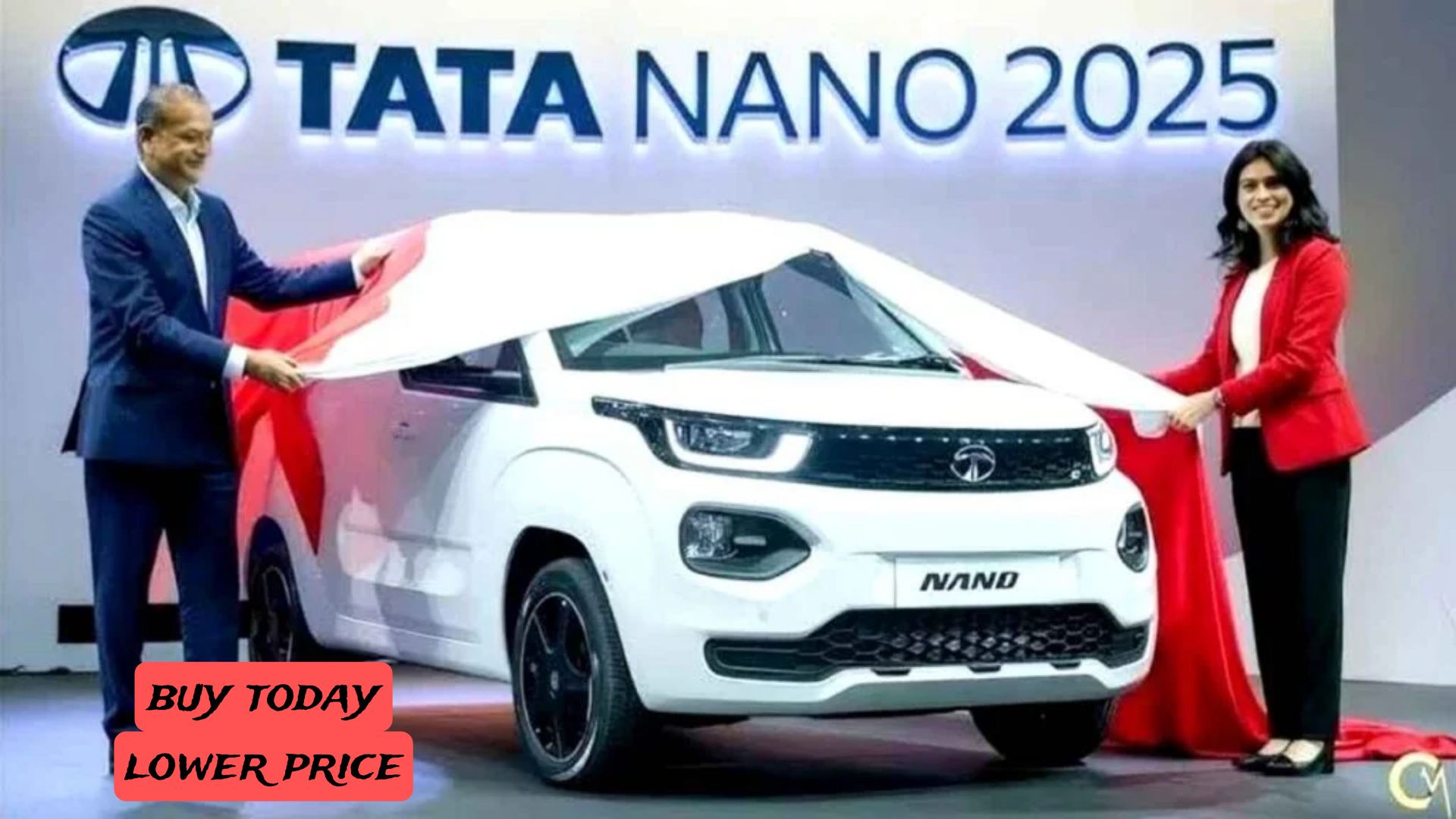
Tata Motors has surprised the Indian auto industry with the dramatic revival of an icon — the Tata Nano 2025. Once discontinued, the Nano now returns as a stylish, practical 4-seater with an astonishingly low down payment of ₹1.15 lakh and a monthly EMI starting around ₹8,100. This bold move signals the company’s intent to reclaim its foothold in the ultra-affordable car segment.
From Budget Pioneer to Bold Comeback
The original Tata Nano was introduced in 2008 as “the people’s car,” lauded for its ultra-low cost and compact form. Over its lifespan, it won hearts but also faced criticism for safety and performance trade-offs. With shifting consumer expectations and stricter regulations, Tata halted its production. However, the 2025 revival aims to balance nostalgia with modern sensibilities, delivering something both affordable and desirable.
Eye-Catching Design & Comfort for Four
Unlike earlier versions, the new Nano retains compact urban agility while embracing a more refined, contemporary design. Sleeker lighting, sharper lines, and subtle premium touches lend it an upgraded aesthetic. Despite its small footprint, the vehicle now comfortably accommodates four passengers, letting small families or urban commuters travel together without compromise. The interior is reworked to be more comfortable, with smarter ergonomics, sufficient headroom, and better materials than earlier Nano editions.
Efficient Performance for City Life
Under the hood, the new Nano is built for daily commuting. Reports suggest a small, efficient petrol powertrain capable of delivering stellar mileage figures — estimates range between 36 and 50 km/l depending on driving conditions. Its top speed is modest (in the 100–110 km/h bracket), making it ideal for city corridors rather than highway blasts. Transmission options include a manual and possibly an AMT (automated manual transmission) variant to appeal to those who prefer less clutch work.
Affordability at Its Core
The headline-catching 🎯 offer is the low entry barrier: ₹1.15 lakh down payment and ₹8,100 monthly EMI. This makes the Nano accessible to first-time car buyers, especially in Tier II/III cities. With such financing, Tata is banking on volumes to drive sales rather than high margins per car. The relaunch also carries a competitive ex-showroom base price, making it perhaps the most affordable new four-wheeler in India today.
Safety & Features That Matter
Understanding past criticisms, Tata has reportedly beefed up safety features in the new Nano. Dual airbags, ABS with EBD, crumple zones, and reinforced chassis components are said to be part of the package. For convenience and modern expectations, it offers essentials like power windows, digital instrumentation, smartphone connectivity, and possibly a touchscreen infotainment system. Higher variants may add advanced features like reverse camera, parking sensors, and connected car capabilities.
Market Impact & Competition
The return of Nano shakes up the bottom rungs of the automobile market. In a domain increasingly dominated by compact SUVs and premium hatchbacks, the Nano stands apart by targeting those for whom any car is aspirational. Its direct competition might include entry-level hatchbacks and recently launched micro EVs, but its financing and brand legacy might give it a unique edge. If the numbers stack up, the Nano 2025 could shift consumer expectations about what an ultra-budget car can deliver.
Challenges & Risks
Of course, relaunching such a storied name comes with challenges. Consumer perception of past weaknesses, such as safety or build quality, must be overcome. Regulatory compliance, especially emission norms, will require engineering finesse. Maintaining quality control while keeping costs ultra-low is a fine balancing act. Moreover, in an era when EVs are gaining favor, the Nano must justify itself as a relevant proposition in a changing mobility landscape.
Final Word
Tata’s bold move with the Nano 2025 is more than a nostalgia play — it is a test of whether ultra-affordable motoring still has a place in India’s evolving auto market. With a tiny down payment, low EMI, stylish upgrades, and four-seater practicality, it aims to invite a new wave of car owners. Success will depend on whether Tata can deliver value, quality, and trust in equal measure. If so, the Nano could become not just a revival story—but a fresh benchmark for accessible mobility.
